

01
The core job it does
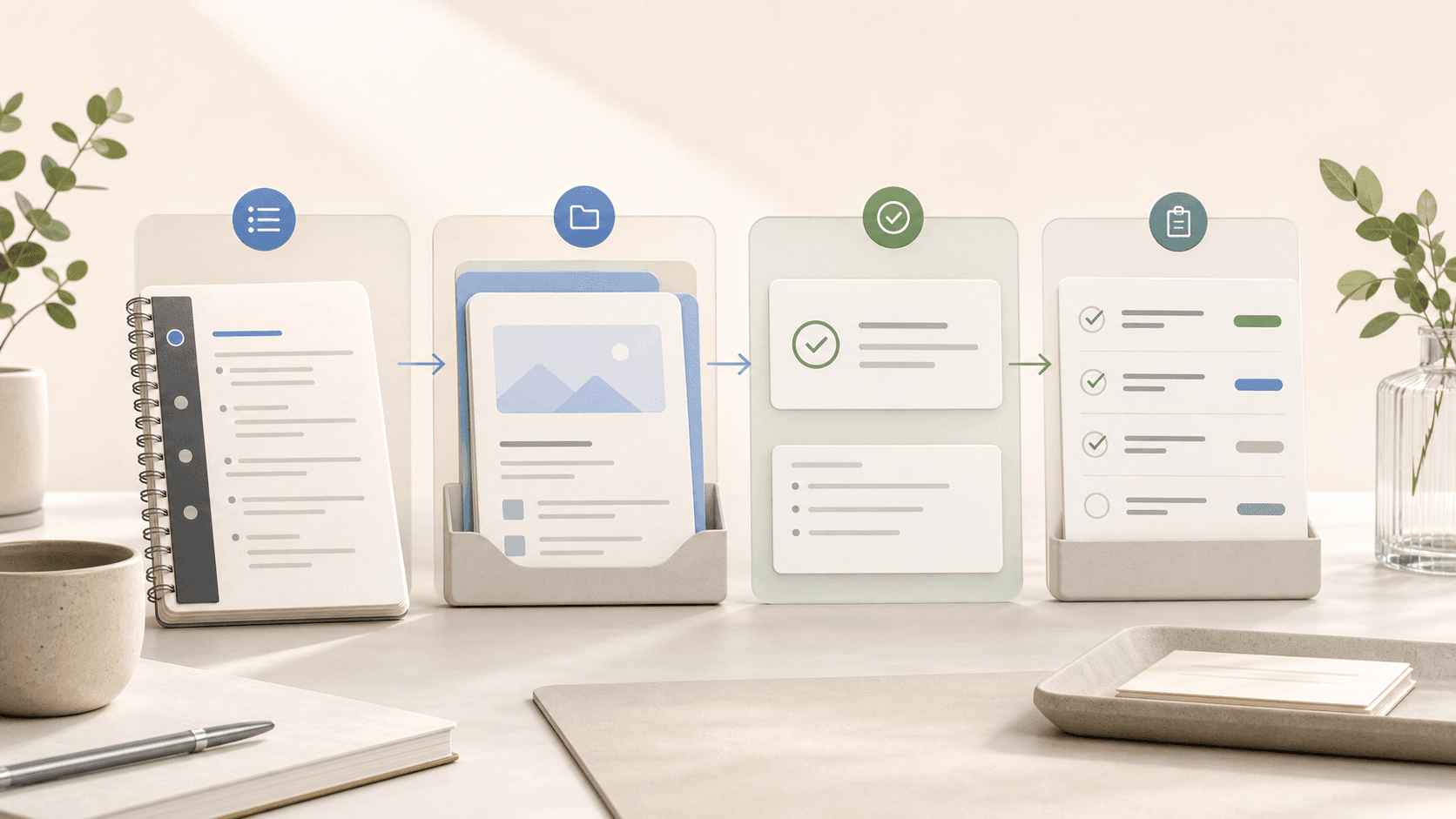
At a minimum, board management software centralizes four things: meeting agendas, board materials, decisions, and the actions those decisions create. Instead of a chair building an agenda in a word processor and emailing a PDF board book the week before a meeting, the agenda, documents, and prior minutes live in one place that every director can reach securely.
The better systems also close the loop after the meeting ends. A decision made in the room turns into an owned, dated action item automatically, rather than depending on someone remembering to write a follow-up email.
- Before the meeting: agenda planning, attendee roles, board book assembly, and pre-read circulation.
- During the meeting: presenter flow, decisions, votes, notes, and supporting documents.
- After the meeting: minutes, approvals, signatures, action owners, reminders, and historical records.
- Between meetings: search, dashboards, board follow-up, and governance continuity.
Where BoardKite helps
BoardKite closes this loop directly: approve a decision in the meeting and the follow-up can become an owned, dated action in the same flow — tracked in the actions feature until it's resolved — instead of depending on someone writing a follow-up email afterward.
03
Common features to expect
Most serious board management platforms include a secure board portal, agenda builder, document storage, minutes workflow, role-based access, notifications, and an audit trail. More complete systems also support decision tracking, action reminders, dashboards, and integrations with calendars or video meeting tools.
AI is becoming useful in this category, but it should support the workflow rather than replace governance judgment. The practical use cases are drafting agendas, summarizing transcripts into minutes, refreshing agenda items with current context, and answering questions from approved board records.
- Agenda and board book preparation
- Secure document sharing and retention
- Meeting minutes, approvals, and signatures
- Decision, vote, and action item tracking
- Audit logs, permissions, SSO, and data residency controls
- Search across meetings, files, decisions, and follow-up
Where BoardKite helps
BoardKite's version of this: sensitive fields — agendas, minutes, transcripts, decisions, attachments — are encrypted at rest with a per-organization key, and AI features run on a provider you choose, from the hosted default to your own Anthropic or OpenAI key, an Azure deployment, or a self-hosted model. The first agenda draft is built around open decisions and unresolved actions instead of a blank page, and a board calendar keeps fiscal, governance, and disclosure dates — reporting deadlines, AGMs, elections — visible alongside your meetings.
04
Who typically owns this
In practice, a corporate secretary, chief of staff, or the CEO's executive assistant usually administers the system, while the CEO or board chair drives agenda content. Directors mostly interact with it as readers and voters — reviewing materials before the meeting and approving minutes and decisions after.
In smaller companies, the founder or chief of staff may own the whole process. In larger organizations, ownership is split across the secretary, legal, finance, committee chairs, and executive leadership. The software should support that reality without forcing everyone into the same permission level.
- Corporate secretary: records, minutes, approvals, and auditability
- CEO or chair: agenda priorities, decision framing, and meeting flow
- Finance and leadership: board package inputs, metrics, and follow-up
- Directors: pre-read access, meeting participation, approvals, and accountability
05
When a team is ready for it
A board can survive with email and folders for the first few meetings, but the cost shows up quickly: late materials, unclear decisions, missing action owners, and minutes that take too long to approve. Those are signs the board has outgrown ad hoc coordination.
The trigger is not company size alone. A small investor-backed company with frequent board decisions may need structure earlier than a larger team with informal advisory meetings. The practical question is whether the board needs a reliable record of what happened and what must happen next.
- Board materials are being resent because versions keep changing
- Directors ask where a decision or prior minute is stored
- Action items are reviewed manually from old notes
- Approvals or signatures are delayed after each meeting
- Investors, auditors, or regulators expect clearer governance records
06
What to look for when evaluating options
The honest test is whether the tool covers the full cycle — before, during, and after the meeting — rather than just one piece of it. A tool that only handles document storage still leaves decision tracking and follow-through as a manual, easy-to-drop process.
Evaluate the workflow with one real board cycle: create an agenda, attach materials, capture a decision, draft minutes, route approval, and review follow-up actions. If the product feels strong in the sales demo but weak in that full cycle, it will probably create manual work later.
- Can the agenda, board book, minutes, decisions, and actions stay connected?
- Can permissions reflect directors, executives, observers, assistants, and committee roles?
- Does search return records, not just files?
- Does the audit trail cover approvals, decisions, downloads, and sensitive changes?
- Can the team choose how AI and transcription process confidential board data?
- Will the workflow still fit once committees, investors, or formal approvals are added?