

01
Template fields
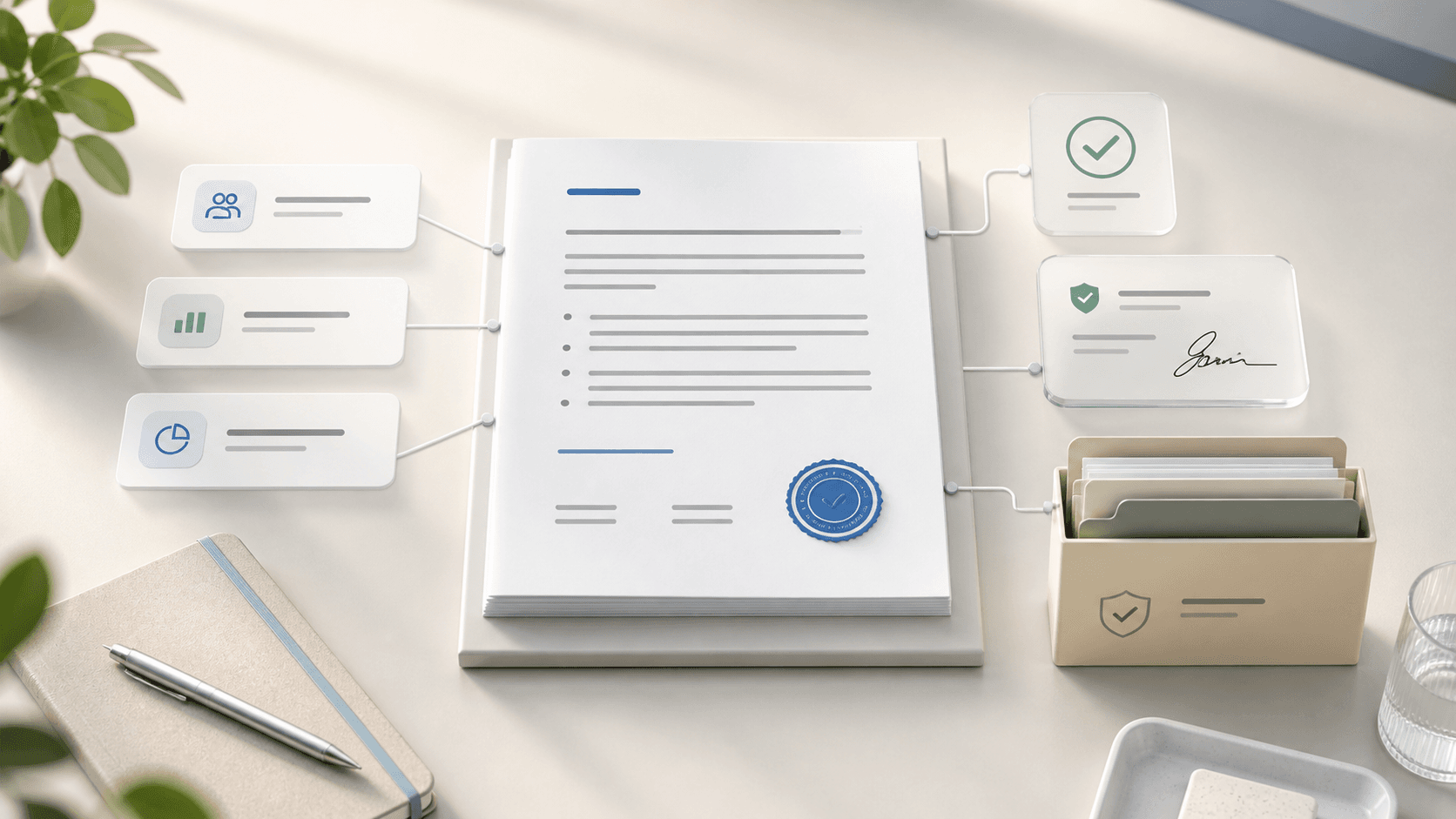
The template should record the essentials: meeting details, attendees, quorum, approvals, key discussion summaries, resolutions, conflicts, action items, and next meeting.
Keep the structure consistent so directors and future reviewers can find the same information every time.
02
Worked example: approval and hiring decision
A scaleup board approves prior minutes, reviews runway, and decides to open two senior hiring searches. Weak minutes say that hiring was discussed. Useful minutes capture the decision, conditions, owner, and follow-up date.
That makes the minutes useful three months later when the board asks whether hiring was authorized and who owned the next step.
| Template section | Capture | Avoid |
|---|---|---|
| Attendance | Present, absent, guests, quorum | Informal attendee list only |
| Decision | Resolution, approval method, conditions | Vague note that topic was discussed |
| Conflict | Recusal or abstention where relevant | Leaving sensitive context out entirely |
| Action | Owner, due date, next review | Unassigned follow-up note |
03
Minutes template vs transcript
Board minutes should show what the board did, not every sentence spoken. A transcript can create noise and slow approval.
Use concise summaries for discussion and precise language for formal decisions.
| Record type | Best for | Risk |
|---|---|---|
| Transcript | Verbatim review where legally or operationally needed | Too much detail for normal board minutes |
| Narrative notes | Context and discussion themes | May miss formal decisions |
| Structured minutes | Approvals, decisions, conflicts, actions, records | Requires discipline during drafting |
04
Copyable minutes structure
A practical board meeting minutes template should be easy to complete during or immediately after the meeting. Use stable headings so every board record contains the same evidence, even when the agenda changes.
The template below is not a legal form and should be adapted to the organization, jurisdiction, bylaws, and board practice. The operating principle is simple: capture what the board did, why the decision context mattered, and who owns the follow-up.
| Minutes section | What to write | Example wording |
|---|---|---|
| Meeting details | Date, time, location, chair, secretary | The board met by video conference on 7 September 2026. |
| Attendance and quorum | Directors present, absent, guests, quorum status | A quorum was present throughout the meeting. |
| Conflicts | Disclosures, recusals, abstentions | Director A disclosed a potential conflict and left the discussion. |
| Prior minutes | Approval or corrections | The minutes of the prior meeting were approved as circulated. |
| Discussion summary | Material themes, risks, and alternatives | The board discussed runway sensitivity under the revised plan. |
| Resolution or decision | Exact approval, conditions, vote where relevant | The board approved the hiring plan subject to monthly budget review. |
| Actions | Owner, due date, next review | The CEO will return with an updated hiring timeline by 30 September. |
05
Sample decision language
Decision language should be more precise than discussion notes. It should identify the action approved, any limits or conditions, and what happens next. This makes the minutes useful when a director, auditor, investor, funder, or new governance owner reviews the record later.
For sensitive items, avoid over-recording private debate while still preserving the substance of the board action. The record should show that the matter was considered, the relevant conflict or risk was handled, and the board reached a clear outcome.
- Approved: The board approved the revised budget for Q4, subject to a cash review at the next meeting.
- Deferred: The board deferred the market expansion decision and requested a revised risk memo from management.
- Conflict handled: The conflicted director was recused from discussion and did not participate in the decision.
- Action assigned: The chair will circulate the final committee charter for written confirmation by Friday.
- Correction made: The board approved the minutes as amended to include the missing condition on the hiring decision.
06
Template checklist
Use the same checklist after each meeting before circulating the draft. It reduces approval churn and makes the final record easier to trust.
The checklist should catch missing decisions, unclear owners, and unresolved draft language before the board sees the minutes.
- Meeting date, time, location, and attendees
- Quorum or attendance status where required
- Prior minutes approval
- Conflicts, recusals, and abstentions
- Formal decisions and resolutions
- Action owners, due dates, and next review
- Approval status and final retention location
Where BoardKite helps
BoardKite helps draft and approve minutes from the meeting context, with decisions and actions connected to the board record.
07
Review before circulation
The first draft should be reviewed before it goes to the full board. That review is not about rewriting every sentence; it is about catching gaps that will slow approval or weaken the record.
The chair, secretary, or governance owner should compare the draft against the agenda, decisions, conflicts, and action notes. If the draft misses a condition attached to an approval, it is easier to correct before directors start commenting.
- Every formal approval is easy to find
- Decision wording includes conditions or limits where relevant
- Conflicts, recusals, and abstentions are handled consistently
- Discussion summaries are concise and not transcript-like
- Action owners and due dates are clear enough to carry forward